
These moments feel small in isolation. Together, they often point to something bigger: a struggle with body image, meaning how a person perceives, thinks, and feels about their own appearance. It exists on a spectrum, from healthy acceptance to painful distortion, and adolescence is when that spectrum gets tested hardest.
This guide walks through what causes negative body image in teens, the warning signs parents should watch for, and practical ways to help, including when it's time to bring in professional support.
Key Takeaways
- Puberty, social media, peers, and family all shape how teens see their bodies
- Unaddressed body dissatisfaction raises the risk of anxiety, depression, disordered eating, and self-harm
- Parents shape body image through modeling, conversation, and media literacy
- Therapy helps teens build a healthier, more resilient body image
What Causes Negative Body Image in Teens
Body image struggles rarely come from one source. They develop through an interaction of biology, psychology, and environment, layered on top of an already vulnerable developmental stage.
Media and Social Media Influence
Filtered photos, editing apps, and algorithm-driven feeds create a constant stream of unrealistic beauty standards. Teens scroll past dozens of polished images daily, often without realizing how heavily edited they are.
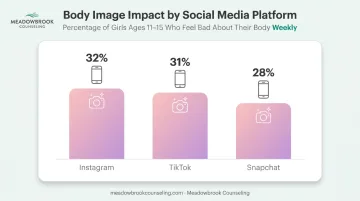
The numbers back this up. In a 2023 Common Sense Media survey of girls ages 11-15, 32% said Instagram made them feel bad about their body at least weekly, along with 31% for TikTok and 28% for Snapchat.
Puberty and Physical Changes
Growth spurts, weight redistribution, and developing secondary sex characteristics happen fast, and rarely on the same timeline as friends. Teens who mature earlier or later than their peer group often feel most self-conscious, since their bodies suddenly stand out in a stage of life defined by wanting to fit in.
Bullying, Teasing, and Peer Pressure
Appearance-based teasing leaves a mark. Project EAT, a large study of students in grades 7-12, found that 30% of girls and 24.7% of boys reported peer weight teasing, with lower body satisfaction showing up across racial, ethnic, and weight groups.
Family Environment and Modeling
Parents shape body image in ways that go beyond direct comments. Even offhand remarks about weight, or a parent's own visible dissatisfaction with their body, can teach a teen what to worry about. Studies tracking mother-daughter pairs over time suggest that a mother's own weight concerns can predict greater body dissatisfaction in her daughter years later.
Individual Psychological Traits
Not every teen reacts to the same pressures the same way. Perfectionism, low self-esteem, and pre-existing anxiety or depression all raise vulnerability, making some kids more likely to internalize appearance-based stress than others.
How Negative Body Image Affects Teen Mental Health and Behavior
Body dissatisfaction rarely stays contained to how a teen feels about a mirror. It tends to bleed into mood, behavior, and daily functioning.
The mental health connection runs both ways. Studies tracking adolescents over time have found bidirectional links between body dissatisfaction and depressive symptoms, meaning each one can worsen the other. Separate research found that higher body dissatisfaction predicted less improvement in social anxiety symptoms over time.
Behaviorally, poor body image often shows up as:
- Restrictive dieting or skipping meals
- Excessive or compulsive exercise
- Avoiding activities tied to appearance exposure
That avoidance is more common than many parents realize. A UK survey of 11-16-year-olds found that 36% of girls and 24% of boys regularly skip exercise or PE class because of appearance worries.
When Dissatisfaction Escalates
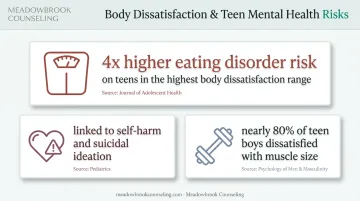
Chronic body dissatisfaction is a documented risk factor for eating disorders. One 8-year study found girls in the highest range for body dissatisfaction developed eating disorders at four times the rate of their peers. This is a serious, potentially life-threatening progression, not just a phase.
Research has also linked extreme body image distress to self-harm and suicidal ideation. This is an association worth taking seriously, not a guarantee of outcome, and it's a reason not to dismiss persistent distress as typical teenage moodiness.
It's not just girls. Boys face real pressure too, though it often centers on muscularity rather than thinness. A separate study of Swedish teen boys found nearly 80% reported some dissatisfaction with their muscle size.
Warning Signs Parents Should Watch For
Trust your instincts. If something feels off, it's worth a conversation, even before you're certain.
Behavioral red flags:
- Fixating on appearance or checking mirrors frequently
- Refusing to be in photos or deleting posted pictures repeatedly
- Making negative comments about their weight, skin, or body shape
Physical and routine changes:
- Skipping meals or eating in secret
- Developing an intense new interest in supplements or extreme exercise routines
- Experiencing sudden shifts in eating patterns, up or down
- Wearing baggy clothes specifically to hide their body
Social withdrawal signs:
- Avoiding swimming, sports, or gym class
- Skipping social events where their body might be "on display"
- Pulling back from friends or activities they used to enjoy
None of these signs alone confirms a problem. Together, or persisting for weeks, they're worth addressing directly and early.
How Parents Can Help Build a Healthy Body Image
You have more influence here than you might think, and much of it starts with modeling.
- Watch your own self-talk. Avoid criticizing your own body in front of your teen, even in passing. They absorb this more than you'd expect.
- Shift the focus to function. Instead of "You look great," try "Your legs got you through that whole hike." Functionality-based compliments teach teens their body is for doing, not just displaying.
- Talk openly about media literacy. Show them how filters, angles, and lighting distort reality. Point out an edited photo together and talk through what changed.
- Do a social media reset. Unfollow accounts that trigger comparison. Follow a mix of body-diverse, body-positive creators instead.
- Encourage movement for enjoyment. Frame exercise around fun and strength, not calorie burning or appearance goals.
Sometimes home conversations aren't quite enough on their own, and that's completely normal. A therapist trained in adolescent mental health can reinforce these lessons with guidance tailored to your teen.
At Meadowbrook Counseling, therapists work with teens on identity, self-esteem, and body image using approaches like CBT and EMDR. This gives families an extra layer of support beyond what happens at home.
When to Seek Professional Support
Some signs mean it's time to move past home strategies alone:
- Distress that persists for weeks despite your efforts to help
- Signs of disordered eating: secretive eating, purging, extreme restriction
- Any self-harm behavior or talk of not wanting to be alive
- Body image concerns interfering with school, friendships, or daily routines
If your teen mentions self-harm or not wanting to be alive, treat it as urgent and call 988 or 911 immediately.
Evidence-based therapy makes a real difference here. Approaches like Cognitive Behavioral Therapy help teens identify and reframe the distorted thoughts driving body dissatisfaction. EMDR can help when body image struggles are tangled up with earlier painful experiences, such as bullying or family conflict, that still shape how a teen sees themselves.
The right therapist fit matters just as much as the approach. Meadowbrook Counseling offers personalized therapist matching, so families aren't left guessing which clinician fits their teen's needs.
The practice verifies insurance benefits before your first session and operates locations across Utah, Washington, Arizona, Wisconsin, Massachusetts, and Texas, with telehealth available depending on therapist availability. That combination of matched therapists, verified insurance, and flexible access gets teens into care faster, without unnecessary delays.

Frequently Asked Questions
What is considered a healthy body image in a teenager?
A healthy body image means accepting and respecting your body without letting appearance define your self-worth. It's marked by a focus on what the body can do, rather than constant evaluation of how it looks.
At what age do body image concerns typically begin in adolescence?
Concerns can start surprisingly early, sometimes by ages 6-8, but they typically intensify during puberty, around ages 10-14, when physical changes accelerate rapidly.
Do boys experience body image issues too, or is it mainly girls?
Both. Girls report higher rates of dissatisfaction overall, but boys increasingly struggle with body image, often centered on wanting more muscle rather than being thinner.
How much does social media contribute to teen body image issues?
Social media amplifies comparison and unrealistic standards, but it's one contributing factor among several, including puberty, family environment, and peer relationships, not the sole cause.
Can negative body image lead to an eating disorder?
Yes, chronic body dissatisfaction is a well-documented risk factor for eating disorders, though not every teen with body image struggles develops one. A licensed therapist can help assess risk early if you notice changes in eating patterns or mood.
How can I start a conversation with my teen about body image?
Lead with curiosity and empathy rather than criticism. Ask open-ended questions about how they're feeling, and steer away from any direct focus on weight or appearance.