Introduction
If you've caught your teen gaming until 2 a.m., you're not alone. Almost every parent of a teenager has worried about screen time. But there's a real difference between a kid who loves gaming and one who has developed a genuine addiction.
The World Health Organization now classifies gaming disorder as a diagnosable condition, marked by loss of control and continued play despite real harm, not just hours logged.
Many parents feel stuck between two bad options: confiscate the console and brace for a meltdown, or let it slide and watch grades, sleep, and friendships slip away.
This guide covers the warning signs and what research says actually drives problematic gaming. You'll also find practical strategies to start using today, plus guidance on when it's time to bring in professional support.
Key Takeaways
- Problematic gaming often signals anxiety, depression, or social struggles, not just free time
- Behavioral, physical, and social shifts matter more than hours logged on a controller
- Collaborative limits set with your teen outperform confiscating devices overnight
- Family therapy and CBT speed recovery when anxiety or depression drives the gaming
Understanding Video Game Addiction in Teens
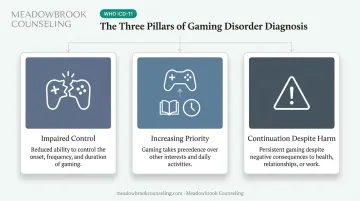
Loving video games and being addicted to them aren't the same thing. The World Health Organization's ICD-11 defines gaming disorder by three core features, not a screen-time cutoff:
- Impaired control over when, how long, or how often gaming happens
- Increasing priority given to gaming over other activities and responsibilities
- Continuation or escalation despite negative consequences at home, school, or socially
The behavior pattern typically needs to cause significant impairment and be present for about 12 months, though WHO allows a shorter window when symptoms are severe. The American Psychiatric Association still lists Internet Gaming Disorder as a condition needing further research rather than a formal diagnosis, using a proposed checklist of nine symptoms.
Why Teen Brains Are Especially Vulnerable
Modern games are engineered to keep players hooked. Loot boxes, near-miss mechanics, and constant small rewards trigger repeated dopamine hits, the same brain chemical involved in other reward-seeking behaviors.
Bradley Zicherman, MD, director of Stanford Medicine's Youth Recovery Clinic, notes that these games repeatedly engage the brain's reward pathways and are, in his words, "sticky for young brains."
Adolescent brains are still building out the prefrontal cortex, the region responsible for impulse control. That's a rough combination: a brain still learning self-regulation, paired with entertainment built to override it.
The Root Cause: Is It the Game, or What's Underneath?
Here's the question most parents skip past: why does one teen play for hours without issue while another spirals into compulsive use? Increasingly, the answer isn't the game itself.
The 2025 UC Santa Barbara Findings
A 2025 study by Falcione and Weber followed 4,289 U.S. adolescents across three years, tracking them at ages 11-12, 12-13, and 13-14. The UC Santa Barbara research team found that teens with preexisting depression, anxiety, or social difficulties were far more likely to later develop problematic gaming patterns. Notably, the study found no significant evidence that gaming itself caused these mental health issues.
In plain terms, gaming often signals a deeper problem rather than causing one.
The Downward Spiral
Once problematic gaming takes hold, it can reinforce the very issues that started it. A socially anxious teen retreats into gaming, which further reduces real-world social practice, which deepens the anxiety, which drives more retreat into gaming.
This is why clinicians caution against removing the console without addressing what's underneath. A teen using gaming to escape anxiety or loneliness who suddenly loses that outlet may simply search for another one.
Risk Factors That Increase Vulnerability
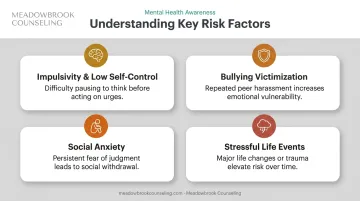
The same vulnerabilities that push a teen toward gaming as an outlet also raise the odds of it becoming compulsive. Watch for these risk factors:
- Impulsivity and low self-control — both correlate strongly with gaming disorder symptoms in adolescent samples
- Bullying victimization — bullied teens show meaningfully higher odds of problematic gaming
- Social anxiety — teens with gaming disorder symptoms report higher rates than peers without it
- Stressful life events — family conflict, a move, or other major disruptions often precede compulsive use
None of these guarantee addiction on their own. They're vulnerability markers worth watching, not a diagnosis.
Signs and Symptoms of Video Game Addiction
Catching problematic gaming early, before it's deeply entrenched, gives parents far more room to intervene without a major crisis.
Behavioral Red Flags
Watch for:
- Neglecting homework, chores, or other responsibilities in favor of gaming
- Lying about how long they've been playing
- Needing more and more playtime to feel satisfied (tolerance)
- Repeated, failed attempts to cut back on their own
These behavioral shifts often bring physical and emotional changes too.
Physical and Emotional Warning Signs
- Disrupted sleep, including staying up until 3 or 4 a.m.
- Skipping family meals or appetite changes
- Declining hygiene or self-care
- Irritability, sadness, or distress when gaming is limited
As these signs build, teens often start withdrawing from real-life friendships as well.
Social Withdrawal Signs
Some teens gradually swap in-person friendships for online gaming relationships. Dr. Zicherman warns this can deepen isolation over time. Headset gaming feels social in the moment, but it doesn't replace the skills and support built through face-to-face connection.
A note on denial: most teens with problematic gaming patterns won't admit there's a problem. One study found teen self-report questionnaires missed nearly half of clinically diagnosed cases. Parent observation matters more than what your teen tells you.
How Video Game Addiction Affects a Teen's Life
The fallout tends to show up in three connected areas.
Academically, sleep-deprived, preoccupied teens struggle to focus in class. Homework gets skipped or rushed, and grades often slide as gaming crowds out study time. Ordinary gaming habits alone rarely explain poor grades. The compulsive, sleep-disrupting pattern is usually the real driver behind slipping performance.
That same sleep loss and preoccupation rarely stay contained to the classroom. Emotionally and socially, teens can experience heightened anxiety and depressive symptoms while missing out on real-world social skill-building during a critical developmental window. Friendships built entirely through a headset don't teach the same conflict-resolution and reading-a-room skills as in-person relationships do.
Those struggles show up in the body, too. Physically, hours of sedentary play take a toll:
- Eye strain and worsening myopia
- Poor posture leading to neck, hand, and wrist discomfort
- Reduced physical activity and lower fitness levels
Practical Strategies to Help Your Teen Overcome Video Game Addiction
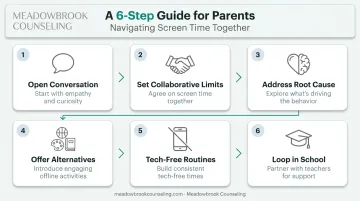
Change sticks better when your teen feels like a partner in it, not a target. Here's where to start:
Open with a non-judgmental conversation. Approach as an ally, not an enforcer. Therapists trained in motivational interviewing ask questions that help teens find their own reasons to change, rather than lecturing them into compliance.
Set collaborative limits, not unilateral bans. Build a family media plan together, with agreed-upon hours and consequences your teen helped design. Buy-in makes limits easier to enforce and harder to resent.
Address the root cause alongside screen time. If anxiety, depression, or social struggles are driving the gaming, pair limit-setting with professional support, such as teen therapy, to address those issues directly. Cutting hours without treating the underlying cause rarely holds.
Offer meaningful alternatives. Help your teen find sports, hobbies, or social activities that deliver a similar sense of achievement and connection, whether that's a team sport, a robotics club, or a part-time job.
Create consistent tech-free routines. Device-free bedrooms and mealtimes work best when they apply to the whole household, not just the teen.
Loop in the school. If grades are slipping, alert teachers or counselors early and ask about reasonable accommodations around school-issued devices.
When to Seek Professional Help
Sometimes home strategies aren't enough on their own. Signs it's time to bring in outside support include:
- Persistent decline in school performance despite consistent effort at home
- Disrupted sleep patterns lasting several weeks
- Strained family or peer relationships that don't improve with structure
Evidence-based treatments show real promise:
| Approach | What the research shows |
|---|---|
| CBT-based relapse prevention | A randomized trial of 102 teens ages 13-18 found greater symptom improvement at 3 months than usual care |
| Family therapy | A trial of 42 adolescents found gaming disorder resolution rates rose from 63% to 88% with structured family therapy over 12 months |
These approaches work because they treat gaming behavior and co-occurring conditions like anxiety or depression together, rather than gaming in isolation.
Meadowbrook Counseling specializes in exactly this kind of support. As a multi-state practice with therapists trained in CBT, EMDR, and family-focused approaches, Meadowbrook offers personalized, evidence-based therapy for teens and families navigating gaming-related struggles.
A dedicated intake team matches families with a therapist suited to their situation. Insurance verification happens before the first session, so you're not guessing about coverage while already stretched thin. You can check your benefits and get matched with a therapist through their online intake process.
Frequently Asked Questions
How do I deal with a teenager addicted to video games?
Start with an open, non-judgmental conversation, then set limits together rather than unilaterally. Address any underlying anxiety or depression alongside the gaming itself, and bring in a family therapist if home efforts stall.
What are the symptoms of being addicted to video games?
Look for neglected responsibilities, lying about playtime, needing more time to feel satisfied, irritability when limited, and withdrawal from in-person friendships. Physical signs include disrupted sleep and declining hygiene.
How many hours of gaming is considered addiction?
There's no fixed hour count. Clinical criteria focus on impaired functioning at school, home, and in relationships, typically persisting for around 12 months, rather than a specific number of hours per day.
Can video game addiction be treated without therapy?
Mild cases sometimes improve with structured family limits and meaningful alternative activities. Persistent or severe cases, especially with co-occurring anxiety or depression, benefit from professional therapy.
At what age is video game addiction most common among teens?
Research suggests symptoms tend to rise through early-to-mid adolescence, driven by brain development and greater access to gaming, before declining in later teen years.
Should parents take away video games completely?
Abrupt, total removal without addressing the underlying cause can backfire, pushing a teen toward relapse or a new unhealthy coping outlet. A gradual, collaborative reduction tends to work better.