

Introduction
You're in a meeting, and two coworkers lean in to whisper. Your stomach drops. You're certain they're talking about you, even though you have no evidence.
This kind of suspicious thinking is common among trauma survivors, and people often mistake it for a personality flaw. It stems from a well-documented pattern connected to PTSD's hyperarousal symptoms.
Roughly 6% of U.S. adults will experience PTSD at some point in their lives, according to the National Center for PTSD. Many of them describe feeling watched, doubting people's motives, or bracing for danger that never comes.
This article breaks down the real connection between PTSD and paranoia, explains how it differs from clinical psychosis, and outlines when it's time to talk to a professional.
Key Takeaways
- Paranoia isn't an official PTSD symptom, but research shows a strong correlation between the two
- Hypervigilance, PTSD's built-in threat detector, is usually what drives paranoid-feeling thoughts
- Everyday trauma-related suspicion is clinically distinct from PTSD with secondary psychotic features
- CBT, EMDR, and exposure-based therapies reduce both hypervigilance and paranoid thought patterns
- Professional support matters most once paranoid thinking starts disrupting relationships or daily life
Understanding PTSD and Its Symptoms
PTSD can develop after someone experiences or witnesses a traumatic event. For a diagnosis, symptoms need to last more than one month and significantly interfere with work, relationships, or daily functioning.
It's more common than many people assume. About 3.6% of U.S. adults had PTSD in the past year, with women affected at roughly triple the rate of men, per NIMH's PTSD prevalence statistics.
Four Categories of PTSD Symptoms
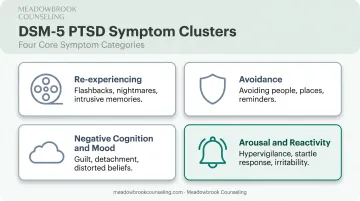
The DSM-5 groups PTSD symptoms into four clusters:
- Re-experiencing - flashbacks, nightmares, intrusive memories
- Avoidance - steering clear of people, places, or conversations tied to the trauma
- Negative cognition and mood - persistent guilt, detachment, or distorted beliefs about oneself and others
- Arousal and reactivity - hypervigilance, exaggerated startle response, irritability
That last cluster, arousal and reactivity, is where paranoid-feeling thoughts tend to originate, with hypervigilance driving much of it.
Can PTSD Cause Paranoia? Breaking Down the Connection
Here's the direct answer: paranoia is not an official PTSD symptom, but the two experiences overlap far more often than most people realize.
A study by Freeman and colleagues, published in Psychological Medicine, followed 106 physical-assault survivors for six months. Researchers found that PTSD and paranoia were distinct experiences, yet they were positively correlated at a notable strength (r = 0.53). At the initial assessment, 11% of participants showed moderate-to-severe suspiciousness, and 12% held suspicious beliefs with delusional-level conviction.
That's a meaningful overlap. It doesn't prove PTSD causes paranoia outright, but it confirms the two frequently travel together.
The Hypervigilance-Paranoia Link
Hypervigilance is the mechanism doing most of the work here. Think of it as an internal alarm system stuck in the "on" position, constantly scanning for threats even when none exist.
That constant scanning warps how neutral situations get interpreted. A glance from a stranger becomes a threat. A coworker's whispered conversation becomes evidence of a conspiracy. The brain isn't malfunctioning; it's doing exactly what trauma trained it to do.
Research on hypervigilance backs this up. In a study of 145 military and civilian participants, PTSD symptom severity independently predicted hypervigilance levels, while trauma exposure alone did not. This distinction matters: it's not the traumatic event itself but the ongoing PTSD symptoms driving the suspicion.
How PTSD Affects the Brain
Three brain regions explain why this alarm system gets stuck:
- Amygdala - the brain's fear center, which becomes overactive in PTSD
- Hippocampus - responsible for context and memory, often showing reduced volume in PTSD
- Prefrontal cortex - the region that normally calms fear responses, but shows reduced activity in PTSD
A 2012 meta-analysis reviewing 342 people with PTSD found consistent amygdala hyperactivation paired with reduced prefrontal cortex activity. In plain terms, the fear center runs hot while the brain's braking system runs cold. This imbalance makes it hard to talk yourself down from a perceived threat, even when part of you knows it's probably nothing.
Common Triggers That Intensify Paranoid Thinking
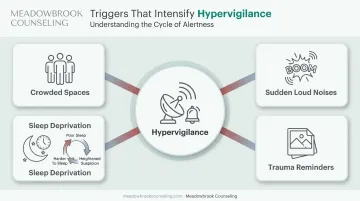
Certain situations tend to crank the volume on hypervigilance:
- Crowded or unpredictable spaces where escape routes feel limited
- Sudden loud noises that mimic trauma-related sounds
- Sleep deprivation, which research links to increased paranoia even in people without PTSD
- Direct trauma reminders - specific sights, smells, or anniversaries
Sleep loss deserves particular attention. Experimental studies restricting sleep to four hours a night found measurable increases in paranoid thinking within days. For someone with PTSD who already struggles with insomnia and nightmares, this creates a frustrating cycle: poor sleep fuels suspicion, and hypervigilance makes sleep even harder to come by.
Paranoia vs. Hypervigilance vs. Psychosis: Knowing the Difference
Not all suspicious thinking is created equal, and the distinctions matter for getting the right treatment.
Hypervigilance vs. True Paranoia
A hypervigilant person usually knows, on some level, that their fear might be exaggerated. They can question the thought, even if they can't fully shake it. Clinical paranoia is different: it involves fixed, delusional beliefs that don't budge even with clear evidence to the contrary.
| Feature | Hypervigilance | Clinical Paranoia |
|---|---|---|
| Awareness | Person can question the fear | Belief feels absolutely certain |
| Flexibility | Updates with new information | Resistant to contrary evidence |
| Trigger | Often tied to specific reminders | May feel constant, untethered |
When PTSD Paranoia Signals Something More Serious (PTSD-SP)
In a smaller subset of cases, PTSD co-occurs with what researchers call secondary psychotic features (PTSD-SP). This involves hallucinations or delusions that persist outside of flashback episodes.
Prevalence estimates vary widely by population. One study of psychiatric outpatients found that after excluding other explanations, only 2.4% of PTSD cases retained genuine psychotic symptoms, while a treatment-seeking refugee sample found rates closer to 30%.
This wide range matters: PTSD-SP isn't common for most trauma survivors, but it's real enough to warrant proper screening.
Delusions connected to PTSD-SP typically take a persecutory or paranoid form, distinct from the milder suspicion that hypervigilance produces on its own.
Other Conditions That Can Cause Paranoia
Paranoid thinking isn't exclusive to PTSD. A licensed clinician will often rule out:
- Bipolar disorder - psychosis can appear during severe mood episodes
- Borderline personality disorder - includes stress-related paranoid ideation
- Schizophrenia - involves hallucinations, delusions, and disorganized thinking
- Schizoaffective disorder - combines psychosis with major mood symptoms
Structured assessments and a full clinical history help separate these overlapping conditions in ways a symptom checklist cannot. Self-diagnosis risks missing a condition that needs a fundamentally different treatment approach.
Signs Your PTSD-Related Paranoia Needs Professional Support
Some hypervigilant suspicion is manageable day-to-day, but other times it starts taking over. Watch for these warning signs:
- Avoiding social situations you used to enjoy
- Struggling with chronic difficulty trusting people close to you, even without a specific reason
- Ending relationships or friendships preemptively, "before they can hurt you"
- Losing focus at work or on daily tasks due to constant hypervigilance
- Feeling exhausted from constantly scanning your environment
Symptom timelines vary from person to person, but without treatment, paranoid thinking tends to deepen rather than fade on its own.
If any of these signs sound familiar, connecting with a licensed trauma therapist for an evaluation is a solid next step. Practices like Meadowbrook Counseling offer insurance verification support before your first appointment, which removes one common barrier to actually starting care.
Treatment Options for PTSD and Paranoia
The encouraging news: paranoid thinking rooted in PTSD responds well to established, evidence-based treatment.
Evidence-Based Therapies
- Cognitive Behavioral Therapy (CBT) helps clients identify distorted, threat-focused thoughts and reframe them with more balanced interpretations
- EMDR (Eye Movement Desensitization and Reprocessing) helps clients reprocess the traumatic memories fueling hypervigilant and paranoid thought patterns
- Prolonged Exposure gradually reduces avoidance by helping clients safely confront trauma-related memories and situations
- Cognitive Processing Therapy targets the negative beliefs trauma creates about safety, trust, and self-worth
Meadowbrook Counseling's EMDR-certified therapists, including Rosario Toral, ACMHC, use this approach to help clients process trauma at a manageable pace. A large 2022 trial of 916 veterans found both Prolonged Exposure and Cognitive Processing Therapy produced meaningful symptom improvement, with roughly 40% and 28% of participants, respectively, no longer meeting PTSD criteria afterward.
Medication Considerations
While trauma-focused therapy remains the foundation of treatment, medication sometimes plays a supporting role. SSRIs and SNRIs remain the first-line medication option for PTSD. Antipsychotic medication is sometimes considered when psychotic features are present, but this decision requires careful evaluation by a prescribing professional. Medication should never be started or adjusted without proper clinical guidance.
What to Expect When Starting Therapy
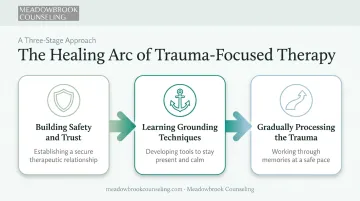
Trauma-focused therapy typically follows a general arc:
- Building safety and trust with your therapist before diving into difficult material
- Learning grounding techniques to manage distress when it surfaces
- Gradually processing the trauma at a pace that feels tolerable, not overwhelming
This progression looks different for everyone. Meadowbrook Counseling's team, spread across offices in Utah, Washington, Arizona, Massachusetts, and beyond, tailors this process to each client rather than following a rigid script. This individualized approach helps rebuild trust and reduce paranoid thinking over time.
Frequently Asked Questions
How long does PTSD paranoia last?
Duration varies by individual and trauma severity. Untreated symptoms can persist for months or years, while therapy often reduces symptoms within weeks to months.
Can PTSD cause extreme paranoia?
In more severe cases, PTSD can co-occur with secondary psychotic features involving intense paranoid delusions. These cases require specialized clinical evaluation rather than general trauma treatment alone.
What is a PTSD flashback like?
Flashbacks are vivid, intrusive re-experiences of trauma involving images, sounds, or physical sensations. They can feel as real and immediate as the original event itself.
How does PTSD affect the brain?
PTSD keeps the amygdala on high alert while reducing hippocampus and prefrontal cortex activity. This combination impairs memory processing and makes it harder to accurately assess real threats.
Is paranoia an official symptom of PTSD?
No, paranoia isn't listed in the DSM-5 criteria for PTSD. The two conditions are closely linked, largely explained by shared hypervigilance mechanisms.
Can therapy help reduce PTSD-related paranoia?
Yes. Evidence-based therapies like CBT and EMDR help clients distinguish real threats from trauma-triggered false alarms, reducing paranoid thinking over time.