Medication helps many people manage these conditions, and there's no shame in taking it. But a growing number of people want to know what else works, whether alongside medication or on its own.
The good news: research backs up plenty of non-drug strategies. This guide walks through the lifestyle shifts, mind-body practices, social strategies, and therapy options with real evidence behind them, plus how to know when it's time to bring in professional support.
Key Takeaways
- Exercise and consistent sleep measurably reduce depression and anxiety symptoms in clinical studies
- CBT and other talk therapies match medication's effectiveness for many mild-to-moderate cases
- One small habit at a time beats overhauling your entire routine in a week
- Social connection and a sense of purpose guard against worsening symptoms over time
- Watch for warning signs that mean it's time to stop self-managing and call a professional
Understanding Depression and Anxiety Before You Begin
Before trying any new strategy, it helps to know what you're actually dealing with.
Depression typically involves a low mood or loss of interest lasting most of the day, nearly every day, for at least two weeks. Common signs include, according to the National Institute of Mental Health:
- Fatigue or low energy most days
- Appetite or sleep changes
- Trouble concentrating or making decisions
- Persistent feelings of worthlessness or guilt
Anxiety (specifically generalized anxiety disorder) shows up as excessive worry that's hard to control, happening most days for six months or more. It often comes with:
- Restlessness or feeling on edge
- Muscle tension
- Irritability
- Trouble falling or staying asleep
A therapist can help you sort out which symptoms you're experiencing and whether they point to depression, anxiety, or both — that clarity shapes which strategies below will help most.
Never stop prescribed medication abruptly without talking to your doctor first. The strategies in this article can work alongside medication or as standalone approaches, but that decision should involve a professional, not a blog post.
Here's the reassuring part: major clinical guidelines, including those from the American Psychological Association, recommend non-medication approaches like guided self-help, cognitive behavioral therapy (CBT), and exercise as first-line treatment for mild-to-moderate depression and anxiety. This isn't a workaround — it's the recommended starting point.
Build a Foundation With Daily Lifestyle Habits
Your daily habits shape your brain chemistry more than most people realize. Small, consistent changes here often matter more than any single big intervention, and they work best alongside professional support rather than as a replacement for it.
Move Your Body, Shift Your Mood
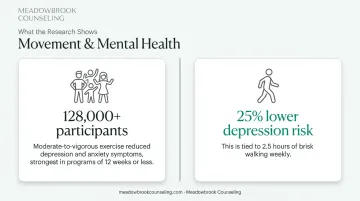
Exercise isn't just "good for you" in some vague, generic way. A massive 2023 umbrella review covering over 128,000 participants found that moderate-to-vigorous physical activity produced meaningful reductions in both depression and anxiety symptoms, with the strongest effects showing up in programs lasting 12 weeks or less.
Similarly, research published in JAMA Psychiatry found that adults getting roughly 2.5 hours of brisk walking weekly had a 25% lower risk of developing depression compared to inactive peers.
You don't need to run marathons. Walking counts.
What You Eat Affects How You Feel
The gut-brain connection is real. A large prospective study (the Whitehall II study) found that men eating 67 grams or more of sugar daily from sweets and sugary drinks had 23% higher odds of developing a common mental disorder within five years compared to lower-sugar eaters.
Cutting back on processed sugar won't cure depression, but it removes one variable working against you, much like fixing another common culprit: poor sleep.
Fix Your Sleep, Fix Part of the Problem
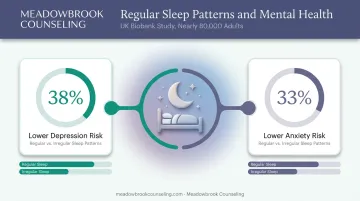
Sleep and mood feed into each other in both directions. Poor sleep predicts depression; depression disrupts sleep. A 2025 UK Biobank study of nearly 80,000 adults found that people with regular sleep patterns had 38% lower depression risk and 33% lower anxiety risk than those with irregular sleep, even when total sleep duration was similar.
Practical fixes:
- Go to bed and wake up at the same time daily, including weekends
- Keep your bedroom dark, cool, and phone-free
- Avoid caffeine after early afternoon
Small Habits That Add Up
A few more foundational pieces worth mentioning:
- Hydration and basic self-care: Showering, brushing your teeth, and getting dressed sound trivial, but depression strips these away first—and their return often signals recovery
- Sunlight and time outdoors: Time outside helps regulate vitamin D and circadian rhythms. A 2021 review found nature-based interventions of just 20-90 minutes, repeated over 8-12 weeks, meaningfully reduced depressive symptoms
Don't try to fix everything at once. Pick one habit. Work on it for a week. Add the next one after that sticks, and if you're finding it hard to build momentum alone, a therapist can help you identify which habit to prioritize first.
Mind-Body and Cognitive Techniques That Rewire Your Thinking
Lifestyle changes address your body. These next strategies target how your mind processes stress and negative thought loops.
Mindfulness Isn't Just a Buzzword
Mindfulness means noticing your thoughts without immediately reacting to them. Instead of spiraling with a worry, you observe it: "There's that thought again." A 2019 meta-analysis found mindfulness-based cognitive therapy meaningfully reduced current depressive symptoms compared to control groups. Researchers noted the evidence is promising, though not yet airtight.
Gratitude Journaling Has Real, Limited Benefits
Writing down what you're grateful for isn't magic, but it's not nothing either. A 2022 randomized study had participants journal about gratitude for 5-10 minutes daily over one week. One month later, stress and negative feelings were measurably lower, though depression and anxiety scores themselves didn't shift significantly.
Translation: it's a solid stress-reduction tool, not a standalone depression treatment.
Catching and Challenging Negative Thoughts
Cognitive reframing involves noticing automatic negative thoughts ("I always mess this up") and replacing them with more balanced ones ("I made a mistake, but that's not the whole story"). Research on cognitive restructuring, a core piece of CBT, links this skill to better therapy outcomes overall. A therapist trained in CBT can help you build this skill faster than trial and error alone.
Set Goals You Can Actually Hit
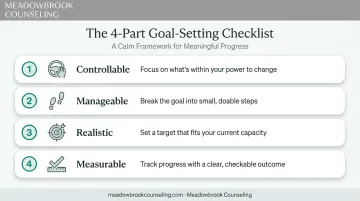
Hopelessness feeds depression. Small wins fight back against it. A workable goal should be:
- Controllable — within your power to influence
- Manageable — small enough to actually start today
- Realistic — matched to your current energy and resources
- Measurable — you'll know clearly when you've done it
"Take a 10-minute walk" beats "get healthy" every time.
When Talking Feels Too Hard
Not every emotion translates easily into words, and goal-setting won't help if you can't first name what you're feeling. Journaling, art, and music give you another outlet when words fail. These creative approaches let you process emotions without needing to explain them out loud, which matters for people who freeze up in direct conversation about feelings.
Strengthen Social Connection and Purposeful Engagement
Isolation and depression often reinforce each other. A 12-year study of over 5,300 middle-aged and older adults found in a National Institute on Aging-funded study that social isolation, loneliness, and depressive symptoms were closely linked, with the relationship running in both directions over time.
In plain terms: withdrawing makes things worse, and feeling worse makes you withdraw more. Breaking that cycle matters.
What actually helps:
- Prioritize relationships that leave you feeling supported, not drained
- Protect healthy alone time too, connection doesn't mean constant socializing
- Consider volunteering; a 2023 umbrella review of volunteering research linked volunteering to better well-being and stronger social ties
- Look into peer support groups, though evidence here is mixed (some studies show real benefit, others show little difference from standard care)
Finding purpose beyond your own struggles, whether through helping others or joining a community, tends to counteract the isolating pull of depression. For those who find it hard to break the cycle alone, structured group therapy offers built-in accountability and connection while working through similar challenges with others.
Explore Evidence-Based Therapy as a Non-Medication Path
Self-guided strategies matter, but they have limits. Therapy fills the gaps that willpower alone can't.
CBT: The Research-Backed Standard
Cognitive Behavioral Therapy is recommended by clinical guidelines like NICE as a first-line treatment for mild-to-moderate depression and anxiety. Multiple large-scale meta-analyses have found no significant short-term difference between CBT and antidepressant medication, with CBT often showing better long-term results.
Medication still plays a role for many people, but the research shows therapy holds its own as a standalone option.
EMDR for Trauma-Rooted Symptoms
When depression or anxiety traces back to past trauma, standard talk therapy sometimes isn't enough. EMDR (Eye Movement Desensitization and Reprocessing) is designed specifically for this. It's a specialty at Meadowbrook Counseling, where therapists like Jonathan Nash and McKenna Rittmanic use EMDR alongside CBT and trauma-focused approaches to help clients process the experiences driving their symptoms, not just manage the surface-level anxiety or low mood.

Matching Matters
Not every therapy style fits every person. Meadowbrook's therapists bring different specialties to the table, from DBT and ACT to Internal Family Systems and solution-focused therapy, so treatment matches the specific issue rather than following a generic template.
Why therapy adds something self-help can't:
- Accountability from someone tracking your progress
- Professional insight into patterns you might not see yourself
- Structured tools (not just tips you read online) practiced with feedback
Cost shouldn't be the barrier it often feels like. Practices like Meadowbrook help verify insurance benefits before your first session, which removes a lot of the guesswork around what you'll actually pay.
When Self-Help Isn't Enough: Signs You Should Seek Professional Support
Self-help strategies work well for many people, but they're not always enough. Knowing the difference matters.
Seek professional help right away if you experience:
- Thoughts of suicide or self-harm
- Urges to hurt yourself
- Inability to complete daily tasks (work, hygiene, basic responsibilities)
- Symptoms lasting two weeks or more without improvement
If you're in crisis, call or text 988 (Suicide & Crisis Lifeline) or text HOME to 741741 (Crisis Text Line). These are immediate, around-the-clock resources. Meadowbrook Counseling, like most outpatient practices, isn't a 24/7 crisis service, but it can help you build ongoing support once the immediate crisis has passed.
Reaching out for therapy isn't giving up on your self-help efforts. It's adding a layer of support that lifestyle changes alone can't provide, especially when symptoms have gotten heavier than they used to be. It's an additional layer of care, not a last resort.
Frequently Asked Questions
Can anxiety and depression be treated without medication?
Yes, mild-to-moderate cases often respond well to therapy, lifestyle changes, and mind-body practices. Severe cases may still need medical evaluation alongside these approaches.
What is the most effective non-medication treatment for depression?
No single approach wins out. Research points to combining regular exercise, therapy like CBT, and social connection for the best results.
How long does it take for lifestyle changes to improve depression or anxiety symptoms?
Consistency matters more than speed. Studies on exercise and nature-based interventions show measurable benefits within 8-12 weeks of regular practice.
Is therapy as effective as medication for depression?
Clinical guidelines often recommend therapy as a first-line treatment for mild-to-moderate depression. Large studies show comparable short-term outcomes to medication, with therapy sometimes performing better long-term.
What foods should I avoid if I have anxiety or depression?
Limiting refined sugar and heavily processed foods may help stabilize mood. Whole foods, vegetables, and lean proteins support better brain function overall.
When should I see a doctor instead of relying on self-help alone?
Call 988 or 911 immediately for suicidal thoughts, self-harm urges, or an inability to function. If symptoms persist beyond two weeks despite your efforts, a licensed therapist can help you build a more effective plan.