

Adolescence brings identity shifts, hormonal changes, and a growing need for independence. When divorce disrupts the family structure at the same time, many girls face a compounding effect that boys don't experience in quite the same way.
This article covers the psychological, behavioral, and relational effects divorce can have on teenage daughters. We'll also walk through age-specific differences, what parents can do to help, and when it's time to bring in a professional.
Key Takeaways
- Daughters often internalize divorce stress as anxiety or depression, while sons act out
- Father absence after divorce raises daughters' risk of early sexual activity and teen pregnancy
- Younger and older teens process divorce differently, requiring different parenting approaches
- Ongoing parental conflict predicts a daughter's adjustment more than the divorce event itself
- Consistent support and professional counseling build daughters' lasting resilience
Why Divorce Hits Teenage Daughters Differently
Adolescence is already a critical window for identity formation. Girls are figuring out who they are, what they value, and how they fit into the world. Divorce arrives right in the middle of that process and disrupts the sense of stability daughters need to do this work.
The Adolescent Development and Divorce Overlap
Teen girls are navigating puberty, shifting friendships, and early romantic interest at the same time their family structure is changing.
Researchers who followed students through the transition from sixth to seventh grade found that multiple simultaneous life transitions predicted worse outcomes than any single transition alone. Family disruption, pubertal change, and school transitions, when combined, led to worse self-esteem, lower GPA, and reduced extracurricular involvement.
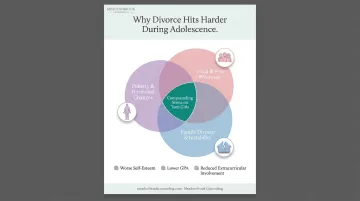
In other words, divorce rarely happens in isolation for a teenager. It stacks on top of:
- Physical and hormonal changes she's already adjusting to
- New social pressures and evolving friend groups
- Growing questions about independence and future relationships
This layering effect is part of why the same divorce might barely register with a younger sibling but hit a teenage daughter hard.
Daughters vs. Sons: Different Coping Patterns
Divorce doesn't affect boys and girls the same way. A Norwegian study followed 413 divorce-exposed adolescents from age 14 to 18 and found that divorce was linked to worse outcomes for girls across nearly every measure.
These included anxiety, depression, self-esteem, and school problems. For boys in the same sample, the association was limited mainly to school difficulties.
Girls tend to turn distress inward. That can look like:
- Withdrawal from family and friends
- Persistent sadness or anxiety
- Declining self-confidence
Boys, by contrast, more often act out through defiance or conflict. Here's what parents often miss: emotional effects in daughters can persist longer, sometimes into young adulthood, especially when she lives primarily with one parent and lacks consistent support from the other.
The Emotional and Psychological Effects on Teenage Daughters
The internal experience of divorce for a teenage daughter often goes deeper than what shows up on the surface. Three patterns show up consistently in research and clinical practice.
Self-Esteem and Identity Struggles
Many daughters report a real drop in confidence after their parents separate. A Norwegian longitudinal study found that girls' self-esteem declined relative to peers from intact families between ages 14 and 18, with father absence partially explaining the drop. A daughter's sense of self is still forming, and losing daily connection with a parent can shake the foundation she's building it on.
This dip in confidence can surface in small, specific ways: second-guessing her appearance, doubting her worth in friendships, or replaying social interactions for hours afterward. Parents may notice her seeking excessive reassurance or, alternatively, pulling away from activities she once enjoyed.
Depression, Anxiety, and Guilt
It's common for daughters to quietly blame themselves for the divorce. She might believe she should have noticed the tension sooner, intervened somehow, or been a better kid. That guilt doesn't always stay put. Left unaddressed, it often evolves into:
- Chronic worry or anxious rumination
- Depressive symptoms that build gradually
- A pattern of self-blame that extends to other life setbacks
Longitudinal data backs this up. Research tracking adolescents over multiple years found that emotional and behavioral problems increased after parental divorce, not before it, and continued rising across follow-up periods spanning four years or more.
Trust and Betrayal
Watching parents separate, especially amid conflict, can shake a daughter's basic trust in relationships. Some daughters carry that skepticism forward into how they view friendships and, later, romantic partners.
Here's what makes this tricky for parents: many daughters look fine on the outside while struggling privately. She might keep her grades up and her room clean, all while quietly withdrawing emotionally.
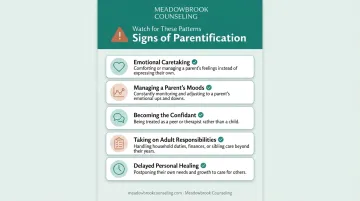
One subtler risk deserves its own name: parentification. This happens when a daughter starts emotionally caretaking a struggling parent, listening to their venting, managing their moods, or stepping into a confidant role that isn't age-appropriate. It can feel like closeness in the moment, but it often strains the parent-child relationship and delays a daughter's own healing.
Behavioral, Social, and Long-Term Relationship Effects
Emotional struggles don't always stay internal. For some daughters, divorce-related stress shows up in behavior and long-term outlook.
Risk-taking behavior is one of the more serious concerns tied to father absence. A long-term study tracking 242 U.S. girls from age 5 to 18 found:
- Adolescent pregnancy rates were roughly seven times higher among girls whose fathers were absent by age 5, compared to girls with present fathers
- A parallel New Zealand sample showed an even larger gap, and the link held even after accounting for socioeconomic status and family stress
- Father absence includes several pathways beyond divorce alone, so this finding isn't a direct verdict on divorce specifically
Other effects to watch for:
- Social withdrawal: pulling away from friend groups, especially if a move or school change accompanies the divorce
- Shifted relationship views: some daughters grow skeptical of marriage or commitment after watching their parents' split
- Academic decline: stress and household instability can chip away at focus and grades
None of these outcomes are guaranteed. But they're common enough that parents should stay alert rather than assume everything is fine just because a daughter seems to be managing.
How Age and Family Dynamics Shape the Impact
Not every teenage daughter reacts the same way, and age plays a bigger role than many parents expect.
Younger teens (roughly 12-14) often express distress indirectly:
- Physical complaints like stomachaches or headaches
- Mood swings that seem disproportionate to the trigger
- Acting out at school or with siblings
Older teens (16-18) tend to intellectualize their feelings and process things more independently, sometimes withdrawing from parents altogether while they work through it internally.
The mother-daughter relationship carries extra weight here, simply because most daughters end up living primarily with their mothers after divorce. The quality of that daily relationship shapes coping and self-esteem more than almost any other single factor.
Family conflict also matters more than the divorce itself. A study of 251 Dutch adolescents in divorced families found daughters were more likely than sons to end up in a "negatively engaged" coparenting pattern, marked by high conflict and low cooperation.
That group reported the highest levels of internalizing problems, while cooperative coparenting was linked to the lowest distress across the board.
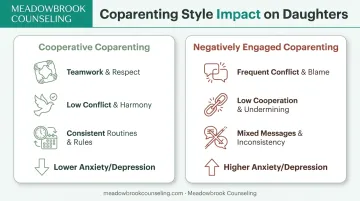
The practical implication: keeping coparenting cooperative and conflict low protects daughters far more than the divorce decision itself does.
How Parents Can Support Their Teenage Daughter Through Divorce
Parents can't undo the divorce, but they can shape how their daughter experiences it.
Practical Strategies for Parents
- Keep routines consistent across both households. Predictable schedules for meals, homework, and bedtime give daughters a sense of stability when everything else feels unsettled.
- Repeat that it's not her fault. Once isn't enough. Guilt tends to resurface, so reassurance needs to as well.
- Don't make her your messenger or confidant. Avoid relaying information through her or venting about your ex in her presence. This protects her from parentification, taking on adult responsibilities before she's ready.
- Model respectful co-parenting. Daughters absorb how their parents treat each other and often carry those patterns into their own future relationships.
When to Seek Professional Support
Some warning signs go beyond what parents can address alone:
- Withdrawal that lasts weeks, not days
- Grades slipping consistently
- Risky behavior, including substance use or early sexual activity
- Persistent sadness, anxiety, or irritability
Family or individual therapy gives a daughter a neutral space to process complicated emotions without worrying about upsetting either parent. It also helps rebuild trust and teaches coping skills that outlast the divorce itself.
For families ready to take that step, Meadowbrook Counseling offers family counseling alongside individual teen therapy, including trauma-informed approaches like EMDR. Therapists such as Rosario Toral, along with other EMDR-trained clinicians on the team, work with adolescents navigating family transitions like divorce.
Meadowbrook also verifies insurance benefits before your first session, making it easier to access care during an already difficult time.
Frequently Asked Questions
How does divorce affect a 14-year-old girl?
At 14, girls are in a critical identity-formation stage and often express distress through mood swings, withdrawal, or physical complaints like headaches. Consistent reassurance from both parents makes a measurable difference during this window.
How does divorce change a teenager's brain?
Chronic family stress can affect the brain regions that manage emotional regulation, particularly the connection between the prefrontal cortex and amygdala. This shift often shows up as greater difficulty managing emotions during and after high-conflict transitions.
Do teenage daughters react differently to divorce than teenage sons?
Yes. Daughters tend to internalize distress through anxiety and depression, while sons more often externalize through defiant or aggressive behavior, though both patterns can overlap.
Can divorce affect a daughter's future romantic relationships?
It can. Witnessing parental conflict or separation sometimes shapes a daughter's views on trust and commitment, leading to skepticism about long-term relationships in adulthood.
When should I seek professional help for my daughter after divorce?
Watch for persistent sadness, behavioral changes, declining grades, or risky activity that lasts more than a few weeks. These signs suggest it's time to consult a licensed therapist, such as one of Meadowbrook Counseling's teen specialists.
How long do the effects of divorce last for teenage daughters?
Many daughters adjust within one to two years, particularly with consistent support and low parental conflict. Without intervention, some emotional effects can persist well into adulthood.