Here's the reality: separation anxiety doesn't always stay in childhood. It can resurface during adolescence, triggered by stress, transition, or underlying anxiety that was never fully addressed.
Many parents don't know if this is a passing phase or something that needs professional attention. This guide breaks down what separation anxiety looks like in teens, why it happens, how it affects their daily life, and what actually helps — including when it's time to bring in a therapist.
Key Takeaways
- Separation anxiety in teens is more common than most parents assume
- Symptoms show up physically (stomachaches) and behaviorally (school refusal, clinginess)
- Untreated anxiety can affect grades, friendships, and long-term mental health
- Cognitive behavioral therapy combined with family support works best
- Early intervention leads to better outcomes than waiting it out
What Is Separation Anxiety in Teens?
Separation anxiety is a natural response to being apart from someone a child feels attached to. It typically peaks in toddlerhood and declines by early elementary school.
But it doesn't always stay gone. Stress, loss, or major life changes can trigger it again well into the teen years. When this happens, your teen isn't regressing. Their nervous system is responding to something that feels threatening.
Normal Worry vs. Separation Anxiety Disorder (SAD)
Not every clingy moment is a disorder. According to the DSM-5, Separation Anxiety Disorder requires:
- At least 3 of 8 specific symptoms (like excessive distress during separation or fear something bad will happen to a parent)
- Symptoms lasting 4 or more weeks
- Distress or impairment that interferes with school, social life, or daily functioning
A teen who feels nervous before a parent's business trip is having a normal reaction. A teen who can't attend school, sleep alone, or function normally for weeks at a time may be dealing with SAD.
Signs and Symptoms to Watch For
Unlike toddlers, teens can often describe why they're anxious. Listen for specifics.
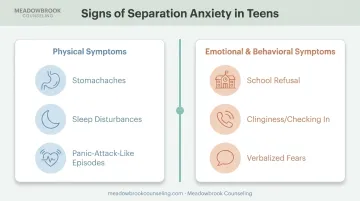
Physical symptoms:
- Stomachaches, nausea, or headaches before separation
- Sleep disturbances or separation-themed nightmares
- Panic-attack-like episodes (racing heart, shortness of breath)
Emotional and behavioral symptoms:
- Refusing to attend school, sleepovers, or social events
- Persistent worry that something bad will happen to a parent
- Clinginess or repeated calls/texts to check on a caregiver
- Verbalized fears like "something bad will happen to you" if you're apart
What Causes Separation Anxiety in Teens?
Separation anxiety rarely appears out of nowhere. It's usually tied to a specific trigger, an underlying vulnerability, or both.
Common triggers include:
- Parental divorce or separation
- Moving to a new home or school
- Death of a loved one or pet
- Chronic illness in the family
- Ongoing family conflict
Risk factors that increase vulnerability:
- A family history of anxiety disorders
- An anxious or sensitive temperament
- Overprotective parenting patterns that unintentionally reinforce avoidance
Adolescence also brings its own set of separation-related pressures. College applications, a new school, or the broader push toward independence can stir up anxiety, especially in teens who are already wired to worry. These fears often run deeper than physical separation, touching on a teen's fear of becoming independent altogether.
How Separation Anxiety Affects a Teen's Daily Life
Left unaddressed, separation anxiety doesn't stay contained. It tends to spread into nearly every part of a teen's routine.
Academic impact:
- Chronic school avoidance or refusal
- Difficulty concentrating due to persistent worry
- Declining grades, which then add more stress on top of the anxiety
Social impact:
- Withdrawal from friendships
- Avoiding sleepovers, trips, or group outings
- Missing developmental milestones tied to growing independence
The psychological effects can extend well beyond the teen years. A nationally representative study of 10,123 U.S. adolescents found a 7.6% lifetime prevalence of separation anxiety disorder, with about 0.6% experiencing severe impairment (National Comorbidity Survey Adolescent Supplement).
More concerning: longitudinal research tracking kids with childhood separation anxiety found that 78.6% went on to develop another mental health disorder by young adulthood (Oregon Adolescent Depression Project). Panic disorder and depression were among the most common outcomes.
This doesn't mean every anxious teen is destined for future struggles. It does make a strong case for addressing it early rather than assuming it'll resolve on its own.
Treatment Options for Separation Anxiety in Teens
The good news: separation anxiety in teens responds well to treatment, particularly when it starts early.
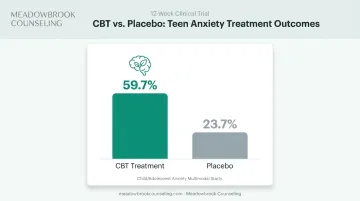
Cognitive Behavioral Therapy (CBT) is the leading evidence-based approach. It helps teens identify anxious thought patterns, challenge distorted beliefs ("if we're apart, something terrible will happen"), and gradually face feared situations through structured exposure. In a large clinical trial, 59.7% of youth responded to 12 weeks of CBT, compared to 23.7% on placebo (Child/Adolescent Anxiety Multimodal Study).
Family therapy often runs alongside individual sessions. It addresses:
- Communication patterns at home
- Ways parents might unintentionally reinforce avoidance (like always allowing a teen to skip events instead of working through the fear)
- Building a consistent, supportive response across the household
For severe cases that don't respond to therapy alone, a licensed provider may consider medication, typically anti-anxiety or antidepressant options, always as a complement to therapy, not a replacement for it.
When to Seek Professional Help
Some anxiety is normal during stressful transitions. But certain signs suggest it's time to bring in a professional:
- Anxiety lasting 4 weeks or longer
- Disruption to school attendance or social life
- Physical symptoms (stomachaches, headaches) with no medical explanation
- Distress that isn't improving despite consistent support at home
If any of these sound familiar, Meadowbrook Counseling works with teens and families across multiple states, offering therapists trained in CBT, DBT, and other evidence-based approaches suited to adolescent anxiety.
The practice matches families with a therapist based on their teen's specific needs and verifies insurance benefits before the first session, so there are no surprises. Both in-person and telehealth appointments are available depending on location and therapist availability.
Practical Strategies Parents Can Use at Home
While professional support matters for persistent cases, there's plenty parents can do in the meantime.
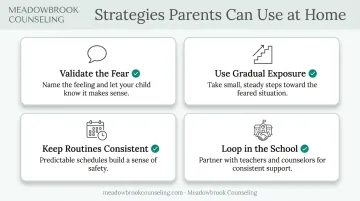
- Validate the fear before trying to fix it. Saying "that's silly, nothing's going to happen" shuts down conversation. Instead, try "I hear that you're scared — can you tell me more about what you're worried will happen?"
- Use gradual exposure, not avoidance. Build tolerance in small steps, such as a short trip to a friend's house before a full sleepover, rather than skipping separations altogether.
- Keep routines consistent. Predictability reduces anxiety. Stick to regular schedules for school, meals, and sleep as much as possible.
- Loop in the school. A quick conversation with teachers or counselors can create a unified plan, so your teen isn't navigating anxiety alone during the school day.
None of these strategies require perfection. Progress in this area is rarely linear, and that's normal.
Frequently Asked Questions
How is separation anxiety in teenagers treated?
Treatment usually combines cognitive behavioral therapy, family therapy, and in severe cases, medication under a licensed provider's guidance. A mental health professional tailors the specific approach to your teen's needs and history.
When does separation anxiety in teenagers typically end?
Timelines vary based on severity and how early treatment begins. With consistent CBT and family support, many teens see meaningful improvement within weeks to a few months.
Is it normal for teenagers to have separation anxiety?
Mild, occasional worry during stressful transitions is common and not a cause for concern. Persistent symptoms lasting four or more weeks that disrupt school or social life may point to a disorder that needs support.
What are the psychological effects of separation on teenagers?
Untreated separation anxiety is linked to a higher risk of developing other anxiety disorders and depression later on. It can also contribute to social withdrawal and missed developmental milestones tied to independence.
Can separation anxiety in teens turn into other anxiety disorders?
Untreated childhood separation anxiety is tied to a greater likelihood of developing panic disorder and other anxiety conditions later in life. Addressing symptoms early, rather than waiting, tends to produce better long-term outcomes.
Should I take my teen to therapy for separation anxiety?
If anxiety persists beyond a few weeks or is interfering with school, sleep, or friendships, professional support is worth pursuing. Meadowbrook Counseling's teen therapists specialize in CBT-based approaches tailored to your teen's needs, and earlier intervention tends to produce better outcomes.