Introduction
It's 10 p.m., and your teenager is still hunched over homework, phone buzzing with unanswered group chat messages, dreading tomorrow's test. Sound familiar?
Stress like this is a normal part of growing up. But when it piles up unchecked, it can spiral into anxiety, social withdrawal, or unhealthy coping habits like substance use.
The good news: stress is manageable with the right tools and support. In APA's 2013 national survey, teens reported average school-year stress of 5.8 out of 10, well above the 3.9 that adults consider healthy, and 27% described their stress as extreme.
This guide covers the most common teen stressors, warning signs parents shouldn't ignore, practical coping strategies, and when it's time to bring in professional support.
Key Takeaways
- Academic pressure, body image, and peer dynamics are today's top teen stressors
- A teen's developing brain reacts to stress faster and more intensely than an adult's
- Parents lower teen stress most through calm presence and healthy coping
- Sleep, movement, and simple relaxation techniques quickly reduce everyday stress
- Persistent stress that disrupts daily life may call for professional counseling
Understanding Teen Stress: Causes and Warning Signs
The Teen Brain's Stress Response
When a teen feels threatened, whether by a pop quiz or a social snub, their body triggers the fight-or-flight response. Adrenaline and cortisol flood the system, sharpening focus and readying the body to react.
Here's the catch: the prefrontal cortex, the brain region responsible for planning, judgment, and emotional regulation, is one of the last areas to fully develop. That means teens often react to stress more intensely and recover more slowly than adults do. This intensity reflects normal brain development still in progress, not a personal failing.
5 Common Stressors Teenagers Face
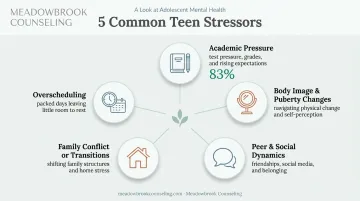
Most teen stress traces back to a handful of predictable sources:
- Academic pressure – School ranked as a significant stressor for 83% of teens, and 61% told Pew Research they feel a lot of pressure to earn good grades
- Body image and puberty changes – Nearly 3 in 10 teens report significant pressure around appearance
- Peer and social dynamics – Fitting in socially weighs heavily, especially with social media amplifying comparison
- Family conflict or transitions – Divorce, financial strain, or a major move can shake a teen's sense of stability
- Overscheduling – Packed extracurricular calendars leave little room to decompress
Warning Signs Parents Should Watch For
Stress doesn't always announce itself directly. Watch for:
- Withdrawal from friends or family
- Irritability, anger, or sudden defiance
- Changes in sleep or appetite
- Physical complaints like headaches or stomachaches
- A noticeable drop in grades or missed assignments
Not all stress is bad. Short bursts before a game or presentation (often called "good stress") can motivate performance. Chronic, overwhelming stress that lingers for weeks and interferes with daily functioning is the version parents need to address.
How Parents Can Help Teens Manage Stress
Home environment shapes how well a teen regulates stress. A stable, communicative household gives adolescents a buffer against the pressures piling up elsewhere.
Stay Observant and Open
Building that buffer starts with staying tuned in. Notice changes in mood or behavior without hovering. Casual conversations, car rides, and shared meals often work better than formal sit-downs. Ask open questions and resist the urge to jump straight to solutions.
Model Healthy Coping Behaviors
Teens mirror what they see. If a parent handles a stressful day by yelling or shutting down, that becomes the template.
Demonstrating calm problem-solving, whether it's taking a breath before responding or talking through a tough decision out loud, teaches teens to do the same. A parent who says, "I'm overwhelmed, let me take five minutes," models coping better than a lecture.
Help Build Structure Without Overloading
Overscheduling backfires. Instead:
- Sit down together and map out the week realistically
- Identify which commitments can be trimmed or paused
- Break large projects into smaller, dated steps
- Build in actual downtime, not just transition time between activities
Encourage Connection and Support Systems
Strong friendships, regular family time, and community involvement all build resilience. When academic stress becomes the dominant issue, looping in a school counselor or teacher can relieve pressure a parent can't address alone.
If stress turns into ongoing anxiety or withdrawal, a licensed teen therapist, such as those at Meadowbrook Counseling, can offer support a parent can't provide alone.
Practical Stress-Management Techniques Teens Can Use
A Simple Five-Step Framework for Stress
Many counselors teach teens a straightforward sequence for handling stress in the moment:
- Recognize the stress and name what's triggering it
- Reduce what can realistically be taken off the plate
- Relax using a breathing or grounding technique
- Release built-up tension through movement or expression
- Reframe the situation with a more balanced thought
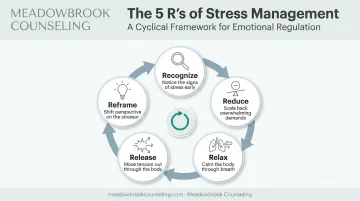
This framework works best when paired with daily habits that keep stress from building up.
Daily Habits and In-the-Moment Techniques
Physical habits form the foundation:
- Sleep: Teens ages 13-17 need 8-10 hours nightly; sleep-deprived teens show worse mood and emotional control
- Exercise: Regular movement lowers cortisol and boosts endorphins; even a 20-minute walk helps
- Nutrition: Balanced meals and lower caffeine intake stabilize energy and mood swings
These habits build resilience, but teens also need quick tools for sudden stress spikes, like before a test:
- Deep belly breathing (inhale for four counts, exhale for six)
- Progressive muscle relaxation, tensing and releasing muscle groups one at a time
- A two-minute mindfulness pause, simply noticing five things they can see or hear
Beyond calming techniques, teens need outlets to process stress afterward.
Journaling, drawing, music, or venting to a trusted adult gives stress somewhere to go instead of building up internally. Encourage teens to catch negative self-talk ("I'm going to fail everything") and reframe it into something more balanced ("This test is hard, but I've prepared").
When Teen Stress Needs Professional Support
Occasional stress is expected. But persistent anxiety, self-isolation, or a noticeable decline in mental health signals it's time for outside help.
Warning signs that warrant a professional consultation:
- Stress lasting weeks without improvement
- Withdrawal from activities they used to enjoy
- Sleep or appetite disruption that doesn't resolve
- Talk of feeling overwhelmed or hopeless
When these signs appear, professional support can make a real difference. At Meadowbrook Counseling, teen therapy focuses on personalized, evidence-based care. Therapists use modalities like EMDR, CBT, and DBT, tailored to each adolescent's specific stressors, whether that's academic pressure, family conflict, or trauma. Sessions happen in a nurturing, non-judgmental space designed to make teens feel heard rather than diagnosed.

With locations across Utah, Washington, Arizona, Wisconsin, Massachusetts, and Texas, plus telehealth options and insurance verification support, families can find consistent care close to home. There's no need to add logistical stress to an already difficult time.
Frequently Asked Questions
What are five common stressors that teenagers face?
The top five are academic pressure, body image and puberty changes, peer and social dynamics, family conflict or transitions, and overscheduling. Academic pressure tends to rank highest, with most teens citing school as a significant stress source.
What are the 5 R's of stress management?
Recognize, Reduce, Relax, Release, and Rebuild/Reframe. This step-by-step approach helps teens identify a stressor, minimize what's avoidable, calm their body, release tension, and shift their thinking.
How can I tell if my teen's stress requires professional help?
Watch for prolonged withdrawal, sleep or appetite changes, and declining grades that last more than a few weeks. If stress disrupts daily functioning, meeting with a licensed therapist, such as one of Meadowbrook Counseling's teen specialists, is a reasonable next step.
How much sleep do teens need to manage stress effectively?
Teens ages 13-17 need 8 to 10 hours of sleep per night. Sleep deprivation directly worsens mood regulation and makes everyday stress harder to handle.
Can stress in teens lead to physical health problems?
Yes. Chronic stress commonly shows up as headaches, stomachaches, fatigue, and even weakened immunity if left unaddressed.
What's the difference between normal teen stress and an anxiety disorder?
Normal stress is tied to a specific situation and fades once it passes. An anxiety disorder involves persistent, excessive worry that's hard to control and interferes with daily life, even without an obvious trigger.