Sound familiar? You're not alone. 19.1% of U.S. adults experienced an anxiety disorder in the past year, according to the National Institute of Mental Health. Millions more deal with everyday worry that never quite rises to a diagnosis but still disrupts sleep, work, and relationships.
The trouble is, most anxiety advice stops at "just breathe" or "try to relax." Those phrases sound nice. They don't tell you what to actually do when your chest is tight and your mind won't slow down.
This guide fixes that. Below, you'll find immediate relief techniques, mindfulness practices, movement and creative outlets, long-term habits, and how to know when it's time for professional support.
Key Takeaways
- The 3-3-3 rule can redirect an anxious spiral in under a minute
- Breathing and body-based practices calm the nervous system, not just distract the mind
- Movement, creativity, and social connection are research-backed anxiety relievers
- Small daily habits build more lasting resilience than occasional big efforts
- Persistent or worsening anxiety often signals it's time for personalized therapy
Quick Relief Activities for Anxiety in the Moment
When anxiety hits hard, you need something you can do right now to calm your body fast.
The 3-3-3 Rule and Sensory Grounding
Anxiety fixates on future threats that may never happen. The 3-3-3 rule interrupts that spiral by pulling your attention back to what's actually in front of you.
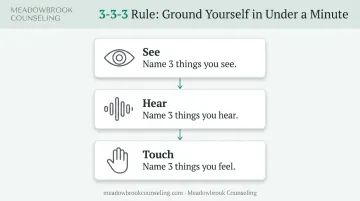
Here's how it works:
- Name three things you can see - a lamp, a crack in the ceiling, your coffee mug
- Name three things you can hear - traffic outside, your own breathing, a ticking clock
- Name three things you can touch or feel - the fabric of your shirt, the chair beneath you, the air on your skin
This is present-moment sensory grounding. Engaging your senses redirects attention away from catastrophic thinking and toward your immediate environment. It won't erase the anxious thought, but it gives your nervous system something concrete to hold onto instead of spinning in "what if" territory.
Breathing Techniques for Fast Calm
Box breathing uses equal counts to slow your breath and shift your body out of fight-or-flight mode:
- Inhale through your nose for 4 counts
- Hold for 4 counts
- Exhale slowly for 4 counts
- Hold empty for 4 counts
Repeat for 2-3 minutes.
Another option is the physiological sigh: two inhales through your nose (one short, one long), followed by one long exhale through your mouth.
A 2023 Stanford study found that just 5 minutes of daily cyclic sighing reduced anxiety and improved mood more than an equal dose of mindfulness meditation, largely by slowing respiratory rate.
Neither technique erases panic on the first try. Used consistently, though, they train your body to recognize when it's safe to stand down from alarm mode.
Physical Grounding in the Body
Sometimes the fastest way to calm your mind is through your body, not your thoughts.
Feet-pressing technique: Sit or stand and press your feet firmly into the floor for 60 seconds. Notice the pressure, the texture beneath you, the stability of the ground. This deep-pressure input signals safety to your nervous system, similar to the effect of a weighted blanket.
Progressive muscle relaxation (PMR): Starting at your feet, tense the muscles for 5 seconds, then release. Move upward through your calves, thighs, stomach, hands, arms, shoulders, and face.
Studies on PMR show consistent anxiety reductions, though effects vary by session length. Even a 2-minute version, hitting just a few muscle groups, can ease acute tension.
Mindfulness and Relaxation Techniques
Mindfulness doesn't mean emptying your mind. It means noticing thoughts without getting swept away by them, and research backs this approach.
Mindfulness Meditation and the Body Scan
A review of 47 clinical trials involving more than 3,500 participants found that mindfulness meditation produced moderate improvements in anxiety symptoms, an effect that held up at three-to-six month follow-ups. It's one of the more evidence-backed tools on this list, even though results vary from person to person.
Body scan meditation is a simple entry point:
- Lie down or sit comfortably and close your eyes
- Bring attention to your feet, noticing any sensation without judging it
- Slowly move attention upward through your legs, torso, arms, and head
- Spend 10-15 minutes total, breathing normally throughout
The goal is simply to notice what's already there, without forcing relaxation.
The "Leaves on a Stream" Exercise
This Acceptance and Commitment Therapy (ACT) exercise teaches you to observe anxious thoughts instead of arguing with them.
Picture a gently flowing stream. As each thought arises, imagine placing it on a leaf and watching it float past. Let each thought drift by without pushing it away or dissecting it. Anxious thoughts feel less overwhelming once you stop treating them like emergencies that demand an immediate response.
Journaling and Cognitive Reframing
Journaling helps you spot patterns you can't see in the moment. Try these prompts:
- What was happening right before I noticed my anxiety rise?
- Which thought kept repeating in my head?
- How would I reassure a friend with this same worry?
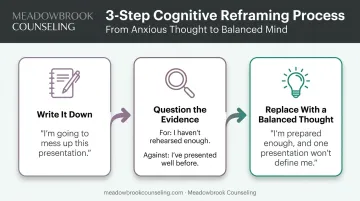
Cognitive reframing takes it a step further:
- Write down the anxious thought (example: "I'm going to fail this presentation")
- Question the evidence: what actually supports it? What contradicts it?
- Replace it with a balanced version (example: "I'm nervous, but I've prepared well and handled tough presentations before")
Neither tool works like magic on the first try. Over weeks, though, they build a clearer picture of what triggers your anxiety and how distorted your anxious thoughts tend to be.
Movement, Creativity, and Connection: Everyday Activities That Ease Anxiety
Sometimes the best anxiety relief is simply doing something you already enjoy.
Movement That Regulates Your Body
Aerobic exercise, even a brisk 20-minute walk, lowers the physiological stress response that fuels anxiety. Research shows aerobic activity and yoga both ease anxiety symptoms in the general population, though the effect is less consistent for people with clinically diagnosed anxiety disorders.
Movement helps most people feel calmer. If you have a diagnosed anxiety disorder, use it alongside treatment from a licensed therapist for the best results.
You don't need a gym membership. Options include:
- A 15-20 minute walk outside
- Gentle yoga or stretching before bed
- Dancing around your kitchen to three songs
- Cycling, swimming, or anything that raises your heart rate
Creative Outlets for Anxious Energy
Anxiety often lives in the body as restless, wordless energy. Creative activities give that energy somewhere to go.
- Art-making: A structured art therapy program reduced anxiety symptoms in adult women more than no intervention at all
- Music: Listening to or playing music shows anxiety-reducing effects across dozens of studies, though results vary by genre
- Hands-on hobbies: Gardening, knitting, cooking, and woodworking channel focus into a repetitive, tactile task that quiets racing thoughts
You don't need talent. You need an outlet.
The Calming Power of Connection
Anxiety convinces you to isolate. Connection does the opposite of what anxiety wants.
Talking through a worry with a trusted friend, even briefly, can help regulate your nervous system through co-regulation, where your body picks up calming cues from someone else's steady presence. Group check-ins, support groups, or a quick "can we talk for five minutes" text all count.
Keep these conversations brief and resolution-focused, so another person's calm nervous system can remind yours what safety feels like.
Building Long-Term Habits to Manage Anxiety
Anxiety relief that lasts comes from small habits repeated daily, not occasional heroics.
Build a nervous system hygiene routine. Pick one practice, stretching, journaling, or box breathing, and do it at the same time every day. Five minutes daily beats an hour once a week.
Protect your sleep. Poor sleep and anxiety feed each other: insomnia has been shown to raise the odds of developing an anxiety disorder later, and anxiety in turn disrupts sleep. Try:
- Going to bed and waking up at consistent times, even on weekends
- Cutting screens 30-60 minutes before bed
- Building a wind-down ritual, like dim lights and a warm shower
Watch your inputs. Certain habits quietly fuel anxiety:
- Caffeine intensifies anxiety, especially past 400 mg a day (about four cups of coffee)
- Alcohol may feel calming short-term but tends to worsen anxiety over time
- Physical clutter and an inconsistent daily routine also disrupt your calm baseline
When Self-Help Isn't Enough: Getting Professional Support
Self-help tools genuinely work, until they don't. Here's when it's time to bring in professional support:
- Anxiety keeps worsening despite consistent grounding, breathing, or mindfulness practice
- You're avoiding people, places, or situations that trigger worry
- Overwhelm feels constant, not tied to any specific stressor
- Daily functioning — work, relationships, sleep, eating — is consistently disrupted
- Panic attacks are increasing in frequency or intensity
If any of this sounds familiar, you haven't failed. Your anxiety needs a more personalized approach than a solo toolkit can offer.
At Meadowbrook Counseling, therapists use evidence-based approaches like CBT, EMDR, and exposure-based therapies to treat anxiety at its root rather than just managing symptoms in the moment. Some clients are dealing with generalized worry; others are working through anxiety tied to trauma, OCD patterns, or panic disorder. Your therapist matches treatment to what's actually driving your anxiety.

With offices across Utah, Washington, Arizona, Wisconsin, Massachusetts, and Texas, plus telehealth options, Meadowbrook makes starting therapy more accessible. Their team also verifies your insurance benefits before your first session, so you know what to expect financially before you walk in the door.
Frequently Asked Questions
What is the 3-3-3 rule in therapy?
It's a grounding technique for calming anxious thoughts: name three things you can see, three you can hear, and three you can touch. Focusing on sensory details pulls your attention out of anxious spirals and back into the present.
What are good activities for people with anxiety?
Effective options span grounding exercises, breathing techniques, mindfulness practices, movement, creative outlets, and social connection. The best approach usually combines a few of these with consistent daily habits like better sleep and reduced caffeine.
How quickly can grounding techniques reduce anxiety?
Many people notice some relief within a few minutes of practicing grounding techniques, since they redirect attention away from anxious thoughts. Lasting change, however, comes from practicing these tools consistently over time.
Can exercise really help with anxiety?
Yes. Aerobic activity lowers physiological stress responses, making it a solid everyday anxiety-management tool. It tends to help most with everyday worry, and works best alongside professional treatment for diagnosed anxiety disorders.
Is journaling effective for managing anxiety?
Journaling helps you identify triggers and thought patterns you might otherwise miss. It's not usually a standalone fix, but it's a useful complement to therapy and other anxiety-relief practices.
When should I see a therapist for anxiety instead of just using self-help activities?
If anxiety keeps worsening, you're avoiding daily activities, or self-help tools aren't providing relief, it's time for professional support. Therapists at Meadowbrook Counseling can identify what's really driving your anxiety and build a treatment plan around it.