
Introduction
If your brain feels like it's racing and stalling at the same time, you're not imagining it. Many adults with ADHD also live with anxiety, and the two conditions feed each other: missed deadlines fuel worry, worry drains focus, and the cycle repeats.
This overlap isn't rare. In the National Comorbidity Survey Replication, which studied more than 3,000 U.S. adults, 47.1% of adults with ADHD had at least one lifetime anxiety disorder. That compares to just 19.5% of adults without ADHD.
Numbers alone don't fix the daily grind, though. Medication can quiet some symptoms, but it rarely touches the avoidance habits, disorganization, and emotional overwhelm keeping both conditions alive. That's where therapy comes in.
This article covers the therapy approaches with the strongest evidence, how they work alongside medication, and how to build a treatment plan that actually fits your life.
Key Takeaways
- ADHD and anxiety often co-occur, each condition intensifying the other
- CBT has the strongest evidence base for treating both conditions together
- DBT, mindfulness, and EMDR treat symptom patterns CBT overlooks
- Combining medication with therapy often outperforms either treatment alone
- A personalized plan requires accurate assessment, not guesswork
Understanding the ADHD-Anxiety Connection
Here's the tricky part: ADHD and anxiety can cause each other's symptoms, creating a loop that's hard to untangle without help.
Can ADHD Cause Anxiety?
Yes, often indirectly. Missed deadlines, forgotten commitments, and repeated performance struggles from unmanaged ADHD symptoms create genuine reasons to worry. For instance, someone who repeatedly misses work deadlines because of ADHD may develop persistent worry about job security long after the deadline has passed. Over time, that worry can calcify into a full anxiety disorder, layered on top of the ADHD that started it.
The reverse happens too. Anxiety consumes mental bandwidth with intrusive worry, which then looks a lot like the poor concentration seen in ADHD. Clinicians caution against assuming ADHD just because someone scores high on inattention symptoms while anxious.
Telling the Symptoms Apart
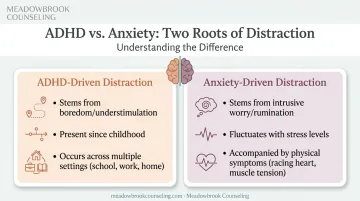
The distraction itself often gives clues about its source:
- ADHD-driven distraction tends to come from boredom, understimulation, or difficulty sustaining effort on unrewarding tasks
- Anxiety-driven distraction tends to come from intrusive worry, rumination, or fear about a specific outcome
- ADHD symptoms typically started in childhood and show up across multiple settings (school, work, home)
- Anxiety symptoms often fluctuate with stress levels and may come with physical signs like a racing heart or muscle tension
Getting this distinction right matters. A therapist who mistakes anxiety-driven distraction for core ADHD (or vice versa) may build a treatment plan around the wrong root cause. That misstep slows progress and wastes time you don't have to spare.
Best Therapy Approaches for Treating ADHD and Anxiety
There's no single "best" therapy for this combination. Most effective treatment blends two or more evidence-based approaches, matched to how your specific symptoms show up.
Cognitive Behavioral Therapy (CBT)
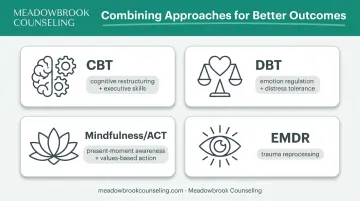
CBT is the most researched option for both conditions, and for good reason. It combines two toolkits in one: cognitive restructuring to challenge anxious thought patterns and worry loops, plus executive-functioning strategies like task breakdown, time-blocking, and planning systems for ADHD-related disorganization.
A meta-analysis of 27 randomized trials involving 1,496 adults found CBT significantly outperformed placebo for anxiety, according to research published in PMC. The pooled effect size (Hedges' g) reached 0.73, with an odds ratio of 4.06 for treatment response.
Separate trials targeting ADHD suggest individual CBT sessions focused on executive-functioning skills produce higher response rates than relaxation and education alone.
Dialectical Behavior Therapy (DBT)
DBT was originally built for emotional intensity, which makes it a strong fit when anxiety is tangled up with impulsivity or reactivity. It teaches four skill sets:
- Mindfulness – staying present instead of spiraling into worry or distraction
- Emotion regulation – naming and managing intense feelings before they take over
- Distress tolerance – riding out discomfort without impulsive escape behaviors
- Interpersonal effectiveness – communicating needs clearly, which reduces relationship-driven anxiety
For adults whose anxiety flares alongside impulsive decisions or emotional outbursts, DBT often succeeds where CBT alone falls short.
Mindfulness-Based and Acceptance-Based Approaches (MBCT/ACT)
Mindfulness training builds present-moment awareness, which directly counters both ADHD-related mind-wandering and anxiety-driven rumination. It's rarely used alone. Most therapists layer it into CBT or DBT for compounded benefit.
Acceptance and Commitment Therapy (ACT) takes a related angle, teaching people to accept difficult thoughts and feelings rather than fight them, while committing to actions aligned with personal values. Evidence for ACT specifically in comorbid ADHD-anxiety cases is still emerging, but early results are promising when paired with more established modalities.
EMDR for Trauma-Linked Anxiety and ADHD
Years of undiagnosed ADHD often leave scars: academic failures, social rejection, or repeated criticism for "not trying hard enough." Those experiences can settle into the nervous system as trauma, driving anxiety and low self-esteem long after the original ADHD symptoms are managed.
Eye Movement Desensitization and Reprocessing (EMDR) helps process those stuck memories so they stop triggering present-day anxiety. At Meadowbrook Counseling, certified EMDR practitioners like Rosario Toral, ACMHC, work with clients to unpack these experiences using this evidence-based approach, alongside other trained EMDR clinicians across the practice.
Combining two or three of these approaches, rather than picking just one, is common and often produces better outcomes than relying on a single modality.
Medication vs. Therapy: Finding the Right Balance
Medication and therapy serve different roles in ADHD and anxiety treatment. Understanding what each one does helps you make an informed choice.
Can ADHD Meds Help Anxiety?
Sometimes, but it depends on the person. Stimulants are the most common first-line ADHD treatment, and better attention control can reduce the anxiety caused by chronic underperformance. In other cases, stimulants can heighten jitteriness or worry.
Non-stimulant options like atomoxetine tend to be gentler on anxiety symptoms for people who don't tolerate stimulants well.
| Medication Type | Primary Target | Anxiety Effect |
|---|---|---|
| Stimulants | Core ADHD symptoms | Mixed; can improve or worsen anxiety |
| Non-stimulants (atomoxetine) | Core ADHD symptoms | Generally neutral or improving |
| SSRIs | Anxiety symptoms | Doesn't address inattention or impulsivity |
Treating the More Impairing Condition First
When both conditions are severe, clinicians recommend treating whichever one is causing more day-to-day disruption first. Improving one often eases the other, since the two feed off each other's symptoms.
Combined Treatment Tends to Win
Therapy alone can produce real, lasting improvement, particularly for anxiety and behavioral ADHD symptoms. But research comparing approaches head-to-head consistently favors combining medication with therapy.
One randomized trial of adults with ADHD found that adding CBT to medication produced greater gains in ADHD symptoms, organizational skills, and self-esteem than medication alone. The gap narrowed somewhat over six months, but the combined group still came out ahead.
The right mix depends on your symptom severity, how you've responded to medication before, and your personal preference. There's no universal formula here.
Building a Personalized Treatment Plan
A good treatment plan starts before therapy does, with an honest look at what's actually driving your symptoms.
Step 1: Get a Thorough Assessment
A skilled clinician distinguishes which symptoms come from ADHD, which come from anxiety, and which overlap. This matters because a plan built on the wrong root cause won't hold up.
Step 2: Sequence the Right Modalities
Therapists often start with CBT to build functional skills, then layer in DBT or EMDR as specific needs surface, like emotional reactivity or unresolved trauma. This sequence follows your goals and what's realistically manageable at each stage, not random guesswork.
Step 3: Add Practical Skills Between Sessions
Therapy works better when it's reinforced daily. Between sessions, this often looks like:
- Organization systems that keep priorities visible
- Accountability check-ins that reinforce progress
- Simplified task lists that reduce decision fatigue
These small structures translate session insights into real behavior change.
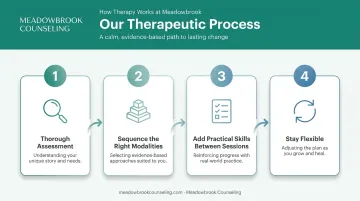
Step 4: Stay Flexible
Symptoms shift. A plan that worked in month one may need adjusting by month four. Ongoing monitoring keeps treatment relevant instead of stale, and that flexibility starts with pairing you with the right therapist from day one.
At Meadowbrook Counseling, the intake team matches clients with therapists suited to their specific combination of ADHD and anxiety symptoms. The team also verifies insurance benefits before the first session, so cost concerns don't delay care.
Complementary Lifestyle Strategies That Support Therapy
Therapy does the heavy lifting, but daily habits determine how far that progress sticks.
- Move your body regularly. A 2025 trial of 63 adults with ADHD found that adding structured exercise to treatment improved symptoms and sleep more than treatment alone.
- Protect your sleep. Limiting caffeine after early afternoon and keeping consistent sleep and wake times reduces symptom severity for both ADHD and anxiety.
- Simplify your routines. Structured daily schedules and shorter task lists cut down the overwhelm that often triggers anxiety in people with ADHD.
None of these replace therapy. They make it more effective.
Choosing the Right Therapist or Practice
Not every therapist is equipped to treat ADHD and anxiety together. Look for a few specific qualities:
- Experience with dual diagnoses, not just one condition in isolation
- Training in evidence-based modalities like CBT, DBT, and EMDR
- A collaborative approach that adjusts as your needs change, rather than a fixed script
- Willingness to coordinate with prescribers if medication becomes part of your treatment plan
Accessibility matters just as much as expertise. Insurance coverage and convenient locations determine whether you can stick with treatment long enough to see results.
Meadowbrook Counseling accepts an extensive range of insurance panels and operates offices across Utah, Washington, Arizona, Wisconsin, Massachusetts, Texas, and beyond, with both in-person and telehealth options.

If you're ready to talk to someone who understands this specific combination of symptoms, reach out for a consultation or call 801-655-5450. The intake team will help match you with a therapist suited to your situation.
Frequently Asked Questions
What therapy is best for ADHD and anxiety?
CBT has the strongest evidence base for treating both conditions together. That said, the best approach often depends on individual symptoms and may combine CBT with DBT, mindfulness training, or EMDR.
Can ADHD meds help anxiety?
Sometimes. Stimulants can reduce anxiety that stems from untreated ADHD struggles, but they can worsen anxiety in other people. Individualized guidance from a prescriber is essential, since therapists focus on behavioral strategies rather than medication management.
Can ADHD cause anxiety?
Yes, indirectly. Missed deadlines, disorganization, and repeated performance struggles from unmanaged ADHD can trigger or intensify anxiety over time, creating a compounding cycle.
How long does therapy take to show results for ADHD and anxiety?
Many adults notice improvement within 8 to 12 weeks of consistent therapy. Timelines vary based on symptom severity, comorbidity, and how consistently someone attends sessions and practices skills between them.
Can ADHD and anxiety be treated without medication?
Yes. Therapy alone can produce meaningful improvement, particularly for anxiety and behavioral ADHD symptoms. Even so, combined medication-and-therapy approaches often yield stronger, more durable results.
What's the difference between ADHD coaching and therapy?
Therapy addresses emotional, cognitive, and behavioral patterns within a clinical framework, including anxiety and trauma. Coaching focuses on practical daily strategies like planning and organization. The two work well together.